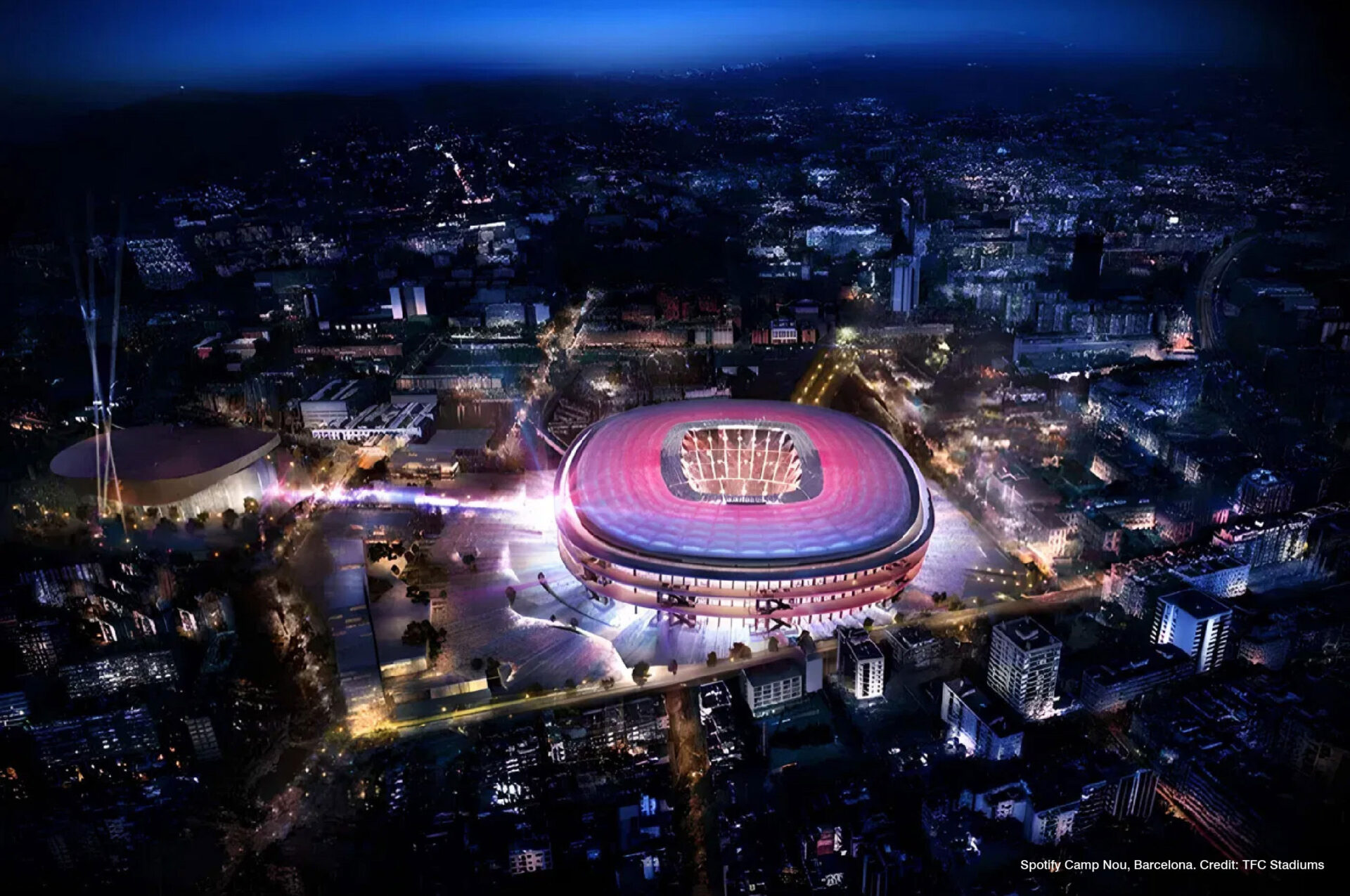
Deloitte reported that over 300 global sports stadiums were predicted to begin renovations or new builds in 2025 and, according to the FT, the approach of European football clubs is “akin to an arms race” as owners attempt to outperform each other – giving fans more reason to leave home entertainment behind, arrive earlier, stay longer, and spend more.
At their best, such stadia serve as cultural anchors – or jewels – made to operate on a global rather than national stage. Often designed by star architects, they combine spectacle with seamless operation and social purpose, reflecting changing consumer attitudes that place increasing value on ease, inclusivity and ethical impact. And while the financial demands of competing with such destinations are extraordinary, the reality is this shift does represent rising expectations and intensifies already hot competition for discretionary spending.
In short, this shift represents a burning platform and organisations of all sizes and means do not have the option of standing still. Venues will struggle to keep pace unless they keep track of what these stadia have to offer and lean into their own unique spirit, or genius loci, so often brought to life by small, thoughtful or local details that could only belong to them, creating a unique sense of character, and are impossible to forget.
To begin with, however, here are four key trends in stadia.
To increase commercial footprints and meet the expectations of newer generations who prioritise experiences over possessions, stadia are evolving to draw visitors year-round. Such a shift is evident at destinations like Edgbaston Stadium, which is transforming into a permeable hub at the heart of its local communities, and Wembley Park, which has developed beyond its centerpiece stadium into a vibrant district and was recently voted by The Sunday Times as one of the best places to live in London.
The new £1.2 billion Tottenham Hotspur Stadium now regularly hosts other sports, artists like Beyonce, and offers themed tours and a Dare Skywalk as well as an electric karting track in partnership with F1. The 2019 redevelopment also brought in celebrity chefs, an on-site vault for privately storing whisky and wines, and the longest bar in Europe – meaning that, according to the FT, the average fan now spends around £16 on a typical match day, as opposed to the £2 average beforehand.
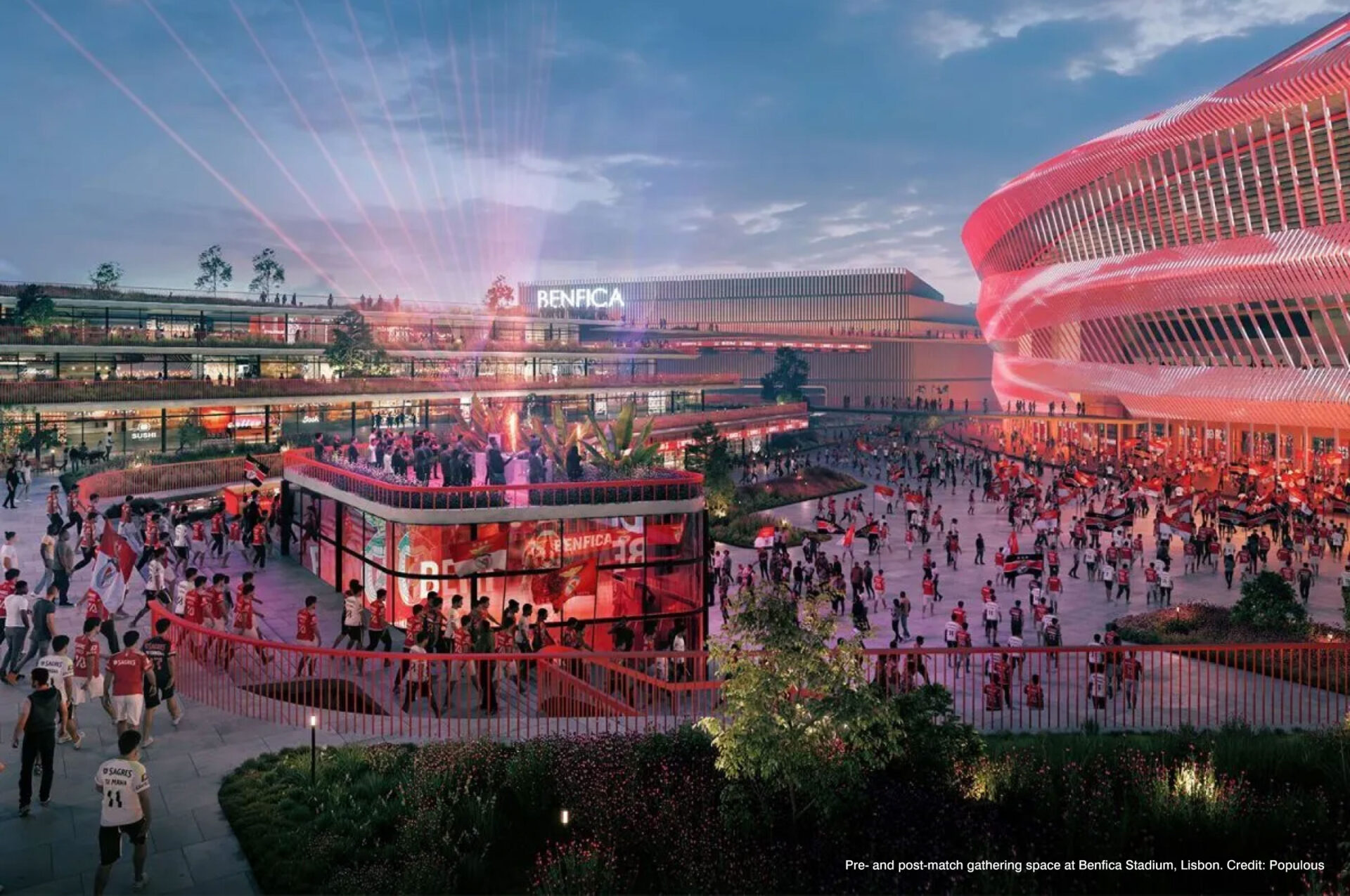
Another example is the pre- and post-match gathering space for fans in front of the Estádio da Luz stadium in Lisbon. According to architecture firm Populous, it has capacity for over 10,000 fans and a DJ deck and event space, whilst being surrounded by food and beverage outlets, retail and terraced restaurants that establish the site as a year-round destination.
Covering everything from seamless functioning to enhancing and gamifying fan experience, the global smart stadium market is experiencing remarkable growth with, according to Deloitte, a 2024 market size of over $8 billion and an expectation to reach over $38 billion by 2033.
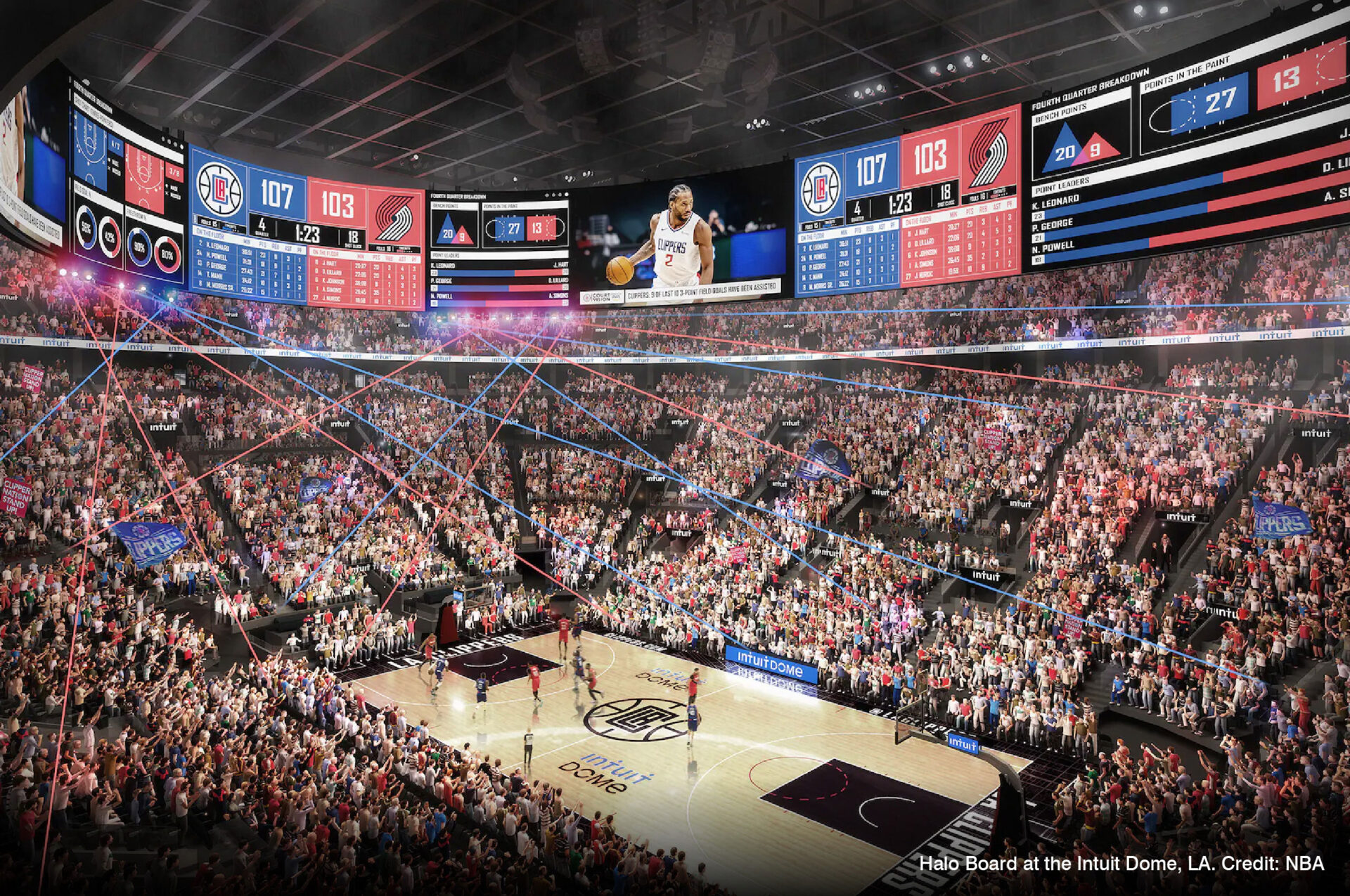
Initiatives are wide-ranging, including facial recognition for quick entry, as with Fly-Through Lanes at the Mercedes-Benz Stadium in the US, smart apps offering AR-enabled wayfinding, real-time data, video replays, custom content and direct-to-seat delivery, as at the Levi’s and SoFi stadia in California, and smart in-seat sensors, notably at the Intuit Dome in LA, where fans who cheer loudest are detected by sensors and rewarded with discounts. The Intuit Dome’s double-sided Halo Board also offers game feeds, stats, player profiles and promotions, and can be played on, as each seat comes equipped with a gaming console – similar to Manchester’s pioneering Printworks from outside the world of stadia, home to Europe’s largest digital ceiling and a large-scale interactive gaming screen.
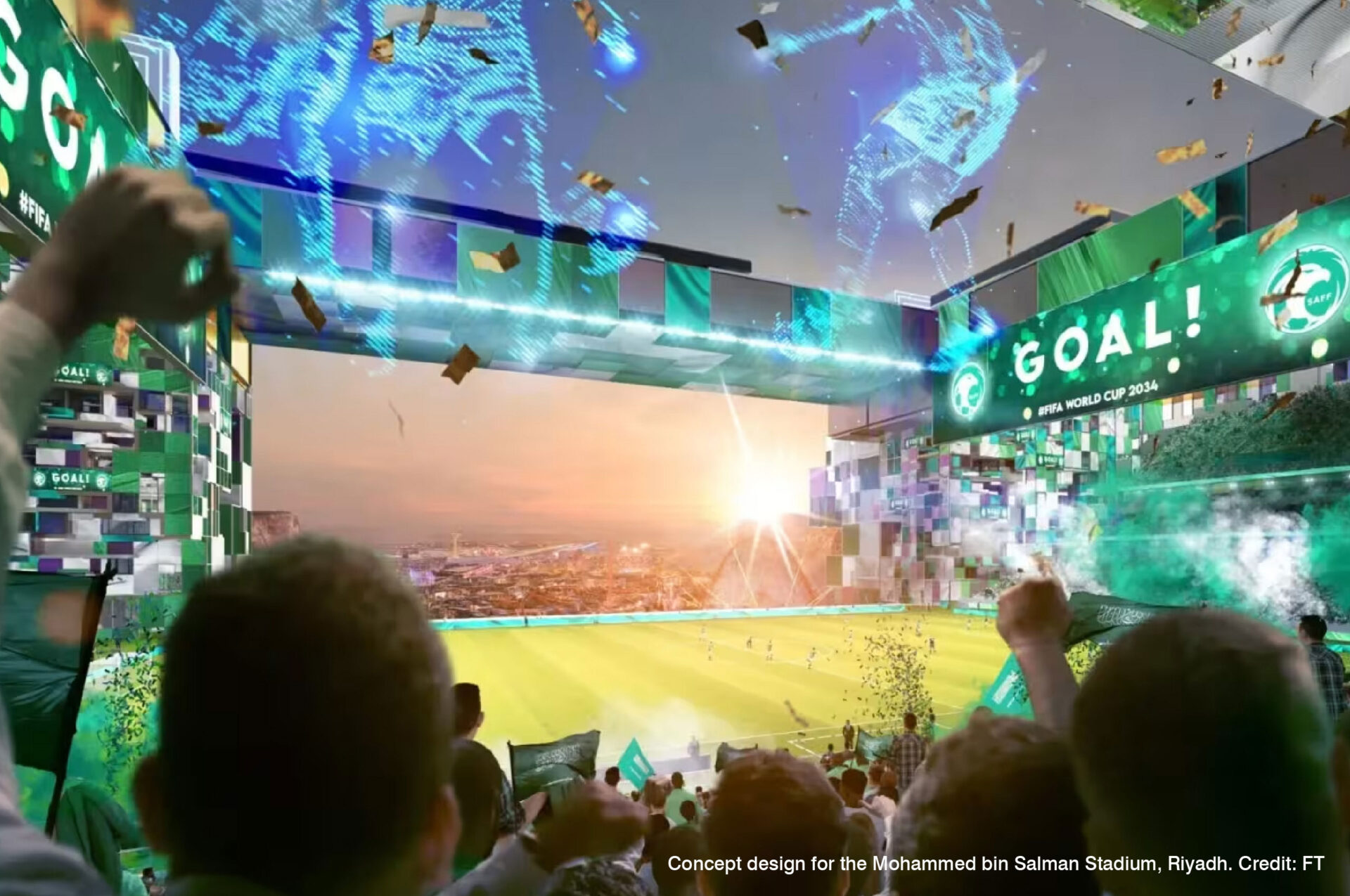
Further to this, according to the FT, concept design for the Mohammed bin Salman Stadium in Riyadh explores hosting esports matches ahead of major events, with holograms and AR bringing video games to life inside the stadium before star players arrive. Wimbledon too is already in on the esports game, having launched Wimbledon eChamps in 2024.
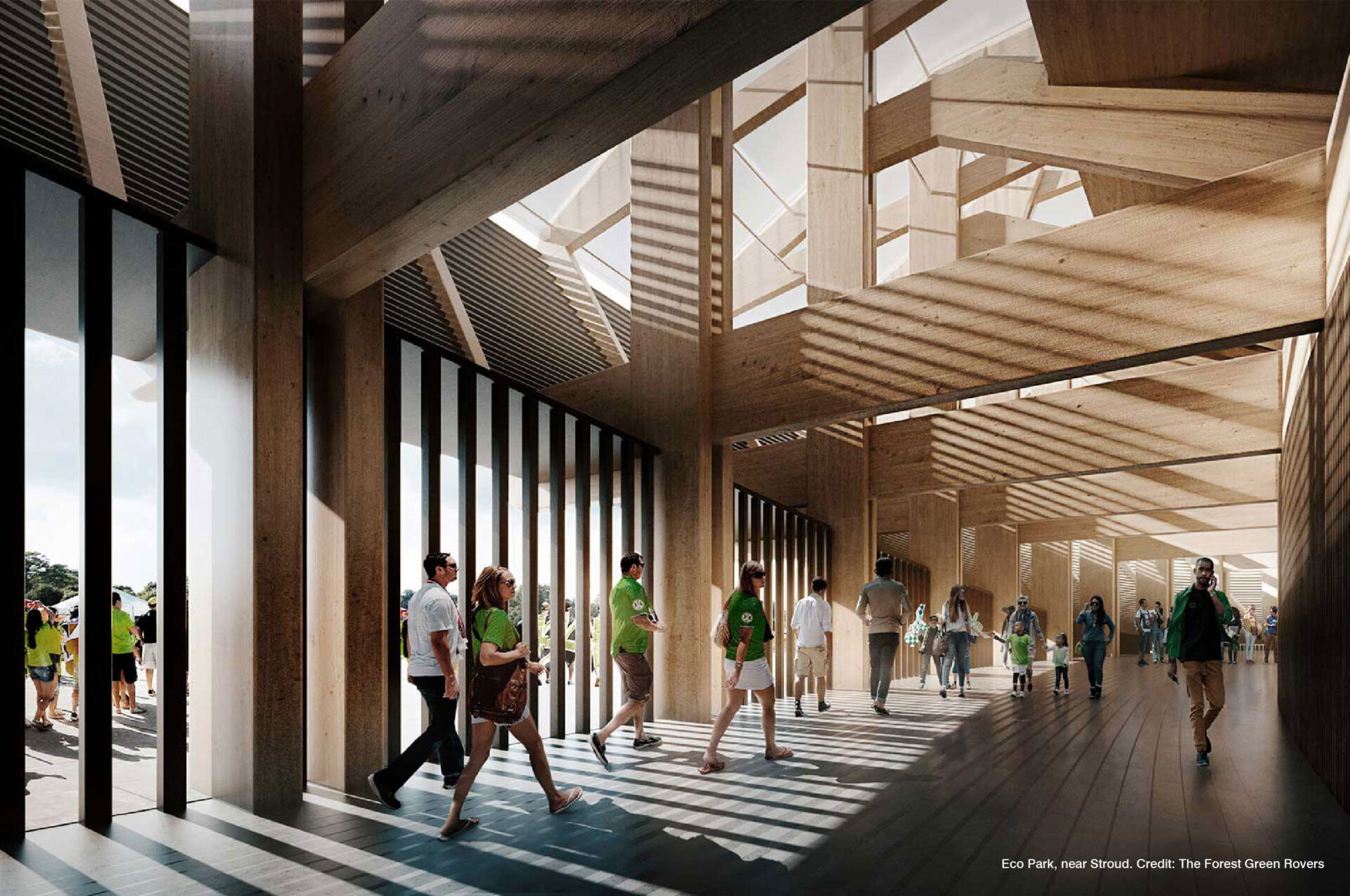
Some stadia are choosing to lead the way in sustainability, reflecting the belief of the majority of UK consumers that sustainability will only become a greater priority for brands in the years to come, as reported by Mintel. This is both through an environmental lens – focusing on renewable energy, eco-friendly materials and reducing impact, as with Edgbaston Stadium’s Go Green Game that cuts matchday emissions – and a social lens, prioritising underserved communities and the public realm, such as with WSL Football’s world-first design guidelines for elite women’s stadia, unveiled this November.
Notably, the Forest Green Rovers, recognised by FIFA as the ‘greenest team in the world’, have received approval to construct Eco Park – a 5,000-seat stadium intended to be made almost entirely of wood and designed by architecture firm Zaha Hadid. It aims to be the world’s lowest-carbon sports venue, and the development includes planting 500 trees and 1.8 km of hedgerows to promote biodiversity.
Separately, the stadium at Santa Fe Yards in Colorado, set to open in 2028, is designed to be a community-based, commercial and multi-use addition to Denver’s public realm, being an anchor to a 41-acre sports and entertainment district whilst also creating a home for – and visibility for – women’s professional football. Populous described how the stadium entrance will open onto a walkable and green amphitheater-like public space, along with restaurants, shops and possible housing.

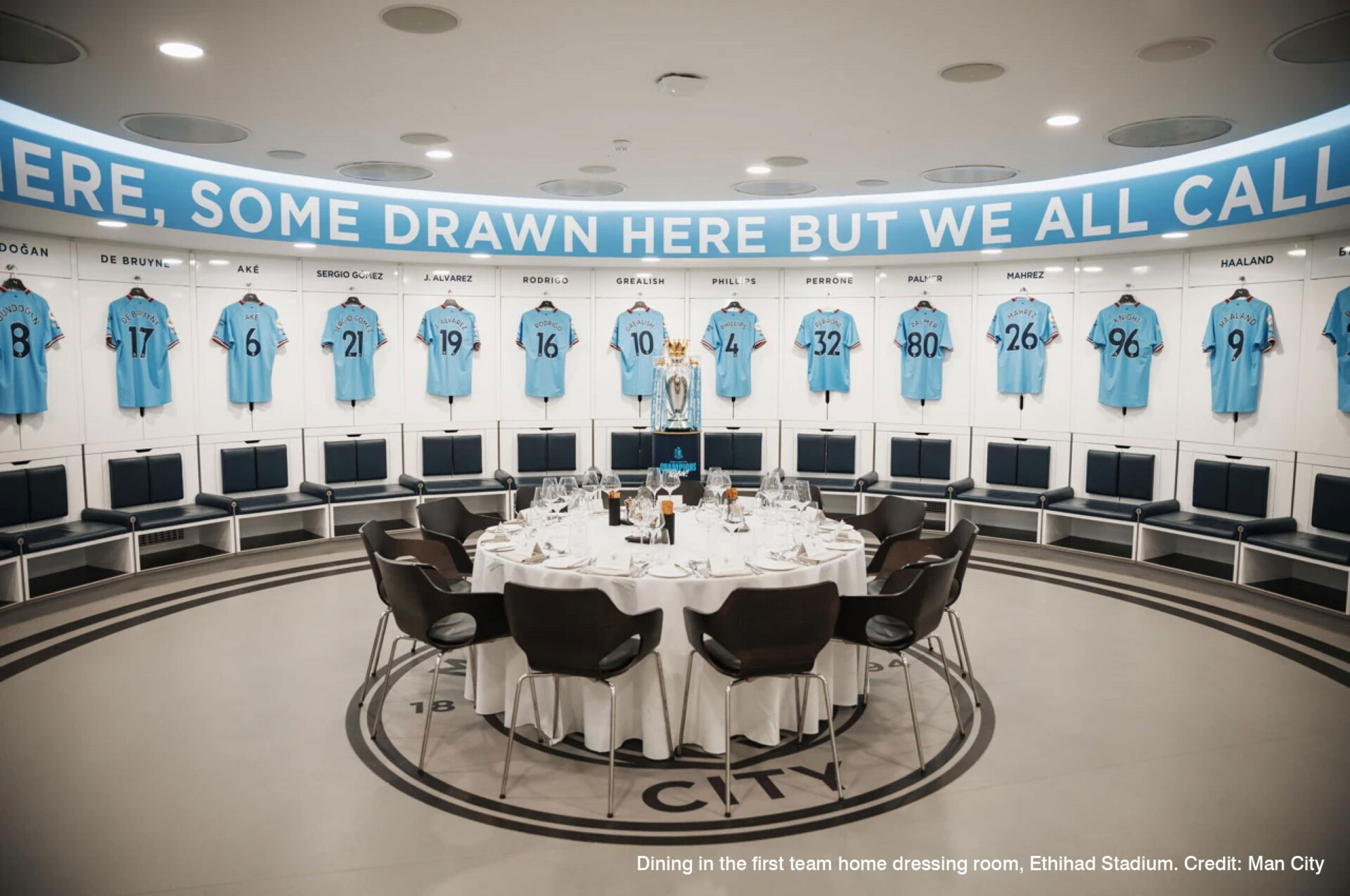
Finally, hospitality has become a key lever for boosting revenue, as fans demand and are offered increasingly elevated experiences. While at the more extreme end, promoters MVP sold a $2 million Owner’s Experience last year – offering ringside seats for the Tyson vs. Paul fight in Las Vegas, private luxury transport and a personal escort, an exclusive arrival, a private green room, a spot on the stage for the weigh in, pre- and post-fight photo opportunities with the boxers, autographed gloves, and a two-night stay in a penthouse – venues in the UK are creating equally competitive experiences.
Manchester City Etihad Stadium offers dining in the first team home dressing room, legends coming to your box or taking you on behind-the-scenes tours, having a personal photographer for the day, and even being able to set the corner flags and paint the penalty and centre spots on the pitch – as well as having VIP access to the pitch in the centre circle moments before kick off in front of a full stadium.
And outside the world of traditional stadia but at their signature sporting and motoring events, Goodwood’s hospitality packages provide personalised concierge services, cuisine from celebrated chefs with produce sourced from their home farm, and access to ‘Only at Goodwood’ moments, including behind-the-scenes tours, audiences with famous drivers, and special surprises.
The Stadium Revolution is transforming single-purpose venues into year-round, dynamic entertainment destinations. Today’s stadia not only elevate the sports they host with first-class technology, premium hospitality and sustainable design, but also bolster their communities and attract local and international visitors with world-class concerts and festivals, esports and gaming, themed tours, museums, clubs, and a rich mix of surrounding restaurants, bars, hotels and retail that satisfy rising expectations.
To keep in step with the future of sports, leisure and entertainment, venues of all sizes must learn from both the successes and failings of these stadia and bring attention to the special qualities, rooted in the genius loci of their place, that make their destination and the moments that happen there irreplaceable. The burning platform need not represent a dead end, so much as the beginning of a new era in destination development.